

Hull named UK’s best university city for student access to part-time work
AS Freshers’ Week approaches, new Novuna analysis finds Hull has the strongest part-time jobs markets for students, as nine in ten expect to work while studying.
- 87% of university applicants expect to work during term time
- 65% of current full-time undergraduates already have paid jobs
- Hull has 251 part-time employee jobs in the local economy for every 100 university students
- Average student rent has risen to £575 a month, with 61% struggling with the cost
As thousands of new students prepare to move to Hull and Freshers’ Week gets under way, finding a part-time job is set to be near the top of many students’ to-do lists.
New analysis from Novuna Personal Finance reveals significant differences in the strength of part-time jobs markets around Britain’s university cities – at a time when almost nine in ten university applicants expect to work alongside their studies to help cover the cost of living.
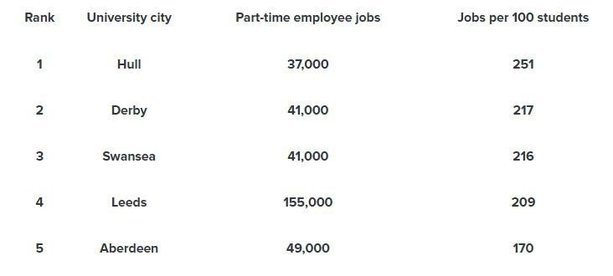
Hull tops the Novuna ranking, with 37,000 part-time employee jobs in the local economy against 14,715 university students – equivalent to 251 part-time jobs for every 100 students.
Derby follows with 217 jobs per 100 students, Swansea with 216 and Leeds with 209. Aberdeen completes the top five with 170.
University cities with the strongest part-time jobs markets for students
|
Rank |
University city |
Part-time employee jobs |
Jobs per 100 students |
|
1 |
Hull |
37,000 |
251 |
|
2 |
Derby |
41,000 |
217 |
|
3 |
Swansea |
41,000 |
216 |
|
4 |
Leeds |
155,000 |
209 |
|
5 |
Aberdeen |
49,000 |
170 |
|
6 |
Plymouth |
41,000 |
168 |
|
7 |
Birmingham |
166,000 |
160 |
|
8 |
Edinburgh |
110,000 |
159 |
|
9 |
Cardiff |
69,000 |
158 |
|
10 |
Liverpool |
98,000 |
155 |
The findings come as working through university becomes increasingly commonplace.
The latest Student Academic Experience Survey from Advance HE and HEPI found 65% of full-time undergraduates are now in paid employment during term time, working an average of nearly 14 hours a week.
Among those about to start university, work is expected to play an even bigger role. The 2026 Unite Students and HEPI Applicant Index found 87% of applicants expect to work during term time, with almost a third expecting to work for more than 16 hours a week.
The financial pressures behind that shift are significant. Students report average living costs of £1,142 a month, while those with paid work earn an average £547 a month – equivalent to around 48% of typical monthly expenditure. The average Maintenance Loan received by English students was equivalent to £640 a month, leaving an average £502 monthly gap against living costs.
Housing is adding to the pressure. Separate 2026 research found average student rent has reached £575 a month, with 61% of students who pay rent saying they struggle with the cost at least some of the time.
Theresa Lindsay, Chief Marketing Officer at Novuna, said:
“For many students arriving in Hull this month, finding a job will be almost as important as settling into university life.
“With almost nine in ten applicants expecting to work while they study, access to part-time employment matters. Hull stands out, with 251 part-time jobs in the local economy for every 100 students – the strongest result in our analysis.
“With student rent now averaging £575 a month, this is no longer just about earning extra spending money. For many students, working is becoming part of how they afford university.”
Financial pressures are also changing where students live. UCAS data shows almost a third of UK 18-year-olds accepted into higher education in 2025 intended to live at home while studying, compared with 22% a decade earlier.