

Energetic Future Conference puts UK's contribution to North Sea carbon storage in the spotlight
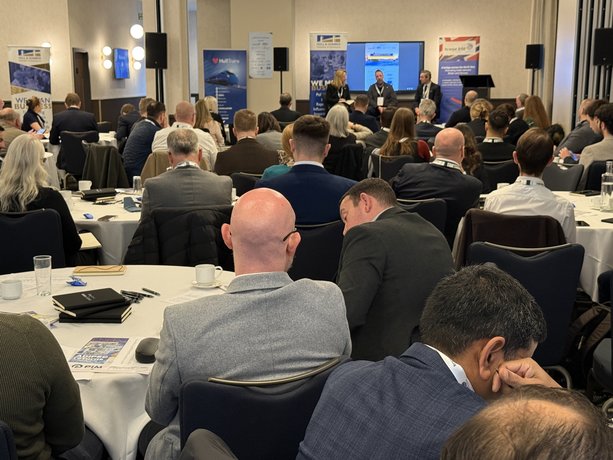
The Energetic Future Conference 2026 in full swing with some insightful panel discussions before a capacity audience.
CARBON capture and storage development has taken centre stage at a major industry event on the Humber.
Energetic Future 2026 explored North Sea opportunity 'From Vision to Value' with UK and Norwegian collaboration central, as the Northern Lights facility blazes a trail and showcases what is now possible for hard-to-abate sectors, writes David Laister.
Organised by Norwegian–British Chamber of Commerce, Hull & Humber Chamber of Commerce, the Norwegian Embassy and Innovation Norway – the world's first operational CCUS facility was held up as the exemplar for what the Humber wants to achieve.
And with Viking CCS participants Associated British Ports, Harbour Energy, Phillips 66 and VPI as supporting partners, the agenda brought delivery into focus, coming on the back of the UK government maintaining its development funding in the recent Budget.
A full day conference followed site visits around the ‘Energy Estuary’ which saw delegates visit Catch, RWE and Able UK on the south bank, and ABP's Hull docks, Siemens Gamesa and Ineos on the north bank.
An evening reception at The Deep, Hull’s iconic aquarium, highlighted the scale of the industrial cluster which was not lost on those addressing a strong audience in the city - where the event made its debut - with a clear desire to learn from what has been delivered in Scandinavia.
Reflecting on the long-term trend of a diminishing manufacturing base in the UK, and wider Europe, Gareth Taylor, the Nordic-Baltic Climate and Energy Counsellor with the British Embassy in Oslo, said: “It has been fantastic seeing the strength of industrial businesses in the region.
“Deindustrialisation is not inevitable. We are seeing a real shift, and this is where we see the North Sea coming into it. We are now seeing regional structures, a clustering and a realisation that we need a home-grown industry, which has to have a local supply chain.
“Offshore wind and carbon capture and storage is a much more important focus area here, with clear value chains, and there is a big opportunity. We are seeing CCS embedded with projects for sustainable aviation fuels and it is very important for the region to stay at the cutting edge, stay relevant and up-to-date, as that’s where the future will be.
“The North Sea basin is a big opportunity, and we’re in a really good position between the UK and Norway, with very complementary strengths. CCS is a good example. Norway has been a leader, Northern Lights is really impressive, and the UK is trying to learn lessons, trying to build the industry from the ground up.
“We have the storage to really help the rest of central Europe, but it is a case of learning the lessons and working together to build the market. That’s something that is a challenge, but we’re still seeing infrastructure being built."
A workforce to deliver
Skills, knowledge and competency capability in Britain is crucial, with the Humber the clear starting point, and frequent praise for its exemplar facilities.
“It was really inspiring to see the Catch facility," Mr Taylor added, referencing one – with HETA also highlighted. "In Norway we have 5.6 million people. The UK has 5.6 million people aged between 18 and 22. We have the workforce opportunity. The reindustrialisation and regional industrialisation we are seeing increases the emphasis on skills, and organisations like Catch are vital, with increasingly more people looking to it – looking at industries using older technologies and exploring newer solutions.”
Tim Hare, a former Lindsey Oil Refinery apprentice from Scunthorpe, is now heading up a division within the Energy Systems arm of Norwegian-headquartered industrial services giant DNV. Picking up on the reindustrialisation angle, he said: “We’re seeing the repurposing of infrastructure; the transition is happening. We’re starting from a point where there is a baseline, things have started to happen. Things have started to shut, but things are starting to open.”
And market analysis points to the Humber being at the very heart.
“Opportunity for the North Sea is hugely exciting,” Dan Cole, senior vice president of data market intelligence company Rysted, said, outlining a jump from $20 billion to $80 billion when it comes to investment in low carbon energy infrastructure in the southern North Sea over the next decade.
“We are optimistic about the energy transition globally, and it is starting to happen, here,” he said, describing the Humber as the epicentre of activity. “It is billions of pounds of investment, money into the supply chain and energy security, all the things we need.”
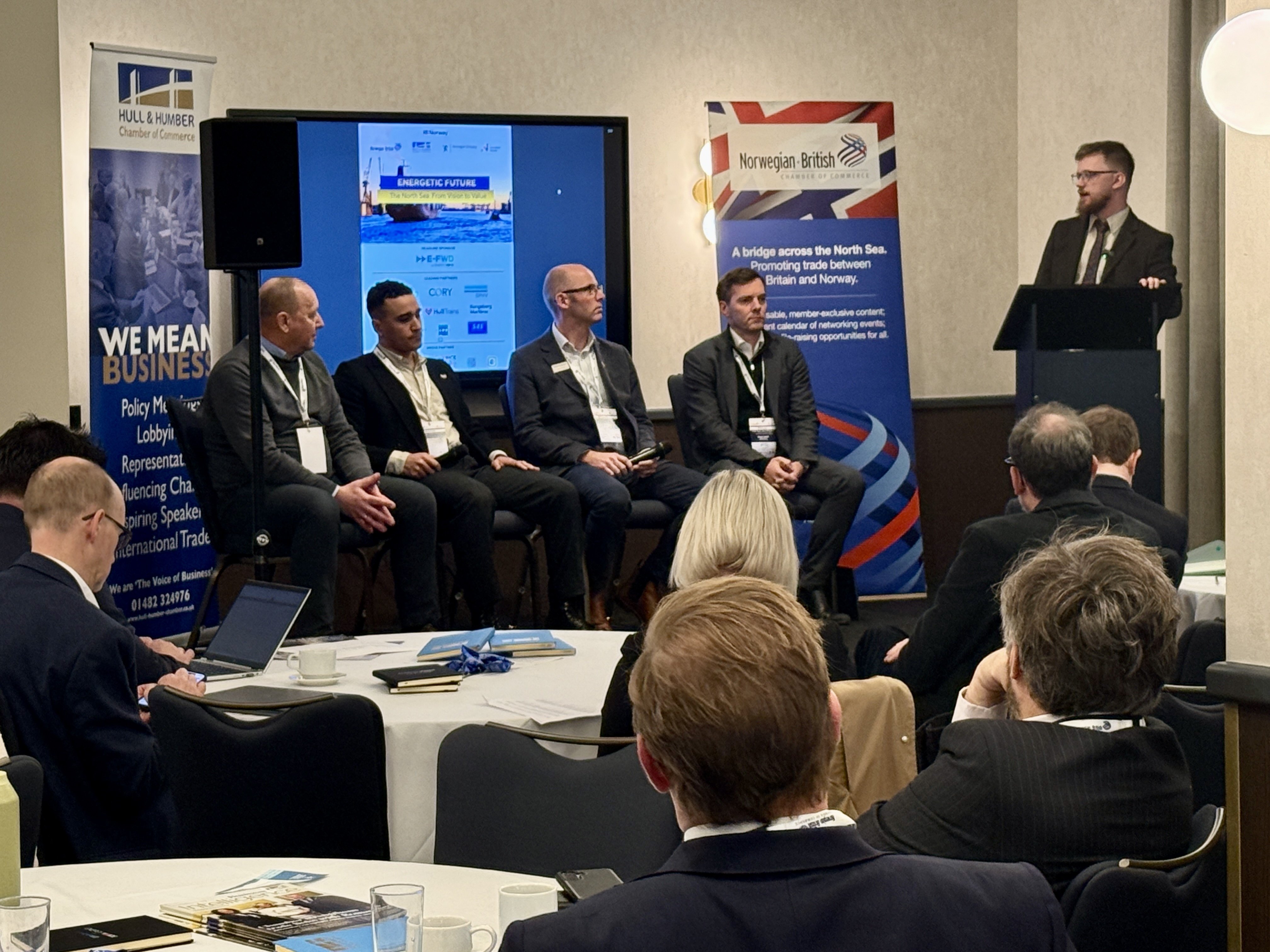
Answering government calls to support energy transition
Investment and policy were never far from the discussion. Humber Energy Board chief executive Iain Harris spoke of the "incredible opportunity in areas championed the most," with CCS a core pillar. He told how 25 per cent of the UK's industry can be decarbonised by decarbonising the Humber, underlining the powerhouse role.
Detailing a project pipeline close to £20 billion, he said: "The Humber has huge scale, huge natural resources and huge natural advantages in terms of reaching the next stage of the energy transition. The majority of these projects have answered the government's calls for competitions, for the energy transition, and to feed the next stage, and have accumulatively spent - at their own risk - hundreds of millions of pounds to get through FEED studies, and various planning consents. Many of these projects stand ready to invest now, if given the right framework to do so. There is a tremendous opportunity for the Humber and the UK.
"Investment of this scale is so fundamental to making sure we don't lose the incredible industry in the Humber that we have today, that is already providing energy security here in the UK."
Long term stability
Padraig, Harrington, head of energy (CEMMEA) at DNB Bank, said: “We need long term stability, that’s the key thing – not just around CCS, but renewables also.
“We need cross-party government support. The Norwegian approach is very much about long-term thinking in all sectors, which provides confidence and the ability to raise finance. The movement we have seen on oil and gas does not help investor confidence."
He said Northern Lights is the "shining example". "It had very strong government support to begin with, it has strong sponsors, and that’s where we need to be thinking to make these businesses commercial," he said. "Norway has now shown that with phase two (subsidy free scaling from 1.5 million tonnes to 5 million tonnes by 2028). It is a long-term business model, and that’s where the focus should be.”
Duncan Hammond, transformation and decarbonisation director at Phillips 66, referenced the recent underlining of support from the Treasury for Viking, which could capture 10 million tonnes by 2035. It would involve up to 20,000 jobs and more than £13 billion of investment.
“It was good to see Viking kept its funding. It is good to see that project moving forward, and we’re continuing to collaborate with them - it gives us a little more certainty on a timeline in terms of decisions," he said. "There has been a lot of talk about the pipeline, we now need to hear the line of people putting into the pipeline – and that’s where we are.”
Closing off the discussion, Marton Volstad, director of public affairs at CCUS Innovation, underlined the cluster advantage offered up on the Humber, compared to his Norwegian focus. He said: “You have a very concentrated region for carbon capture here. Emitters are in a concentrated area alongside transportation and storage. This is an enviable position compared to having a smaller population scattered over a huge area.”